
Appalachian Weather Lore We’re Seeing Around the Farm
Foraging/Harvest - Each changing season on the farm brings with it the signs and symptoms of the weather we can expect, plus a few oddities if we pay close enough attention. As we’re leaning into the autumnal shift on the farm, doing our chores, tending to our Idaho Pasture Pigs, their offspring, the chickens, eggs, the garden and other seasonal routines, we’ve found a good rhythm thrumming in our hearts and around the farm.
Amid the resonance felt and heard around the daily life of chores and planning, there’ve been signs that have caught our eyes. And they’re linked to weather lore. These signs are sprinkled here and there within the plantlife, trees and creatures, and it started some weeks back when we started noticing all the fluffy yellow flowers starting to pop - our beloved goldenrod.
Since we call Appalachia home, we know superstitions and folklore surrounding weather are an important part of what makes us - and if we’re not following the roadmap set by nature’s patterns, we could get lost. We also know our ancestors who called these hills and mountains home followed the signs - or superstitions - because the natural cues found in nature helped before modern forecasts. These days, we have access to all kinds of weather prognostication tools as well as respected local meteorologists, but the weather lore traditions have remained pretty consistent. After all, they’ve been handed down for a reason.
Here are three major weather folklore plantlife signs we’re seeing around the farm.
Goldenrod Galore
(Solidago nemoralis)
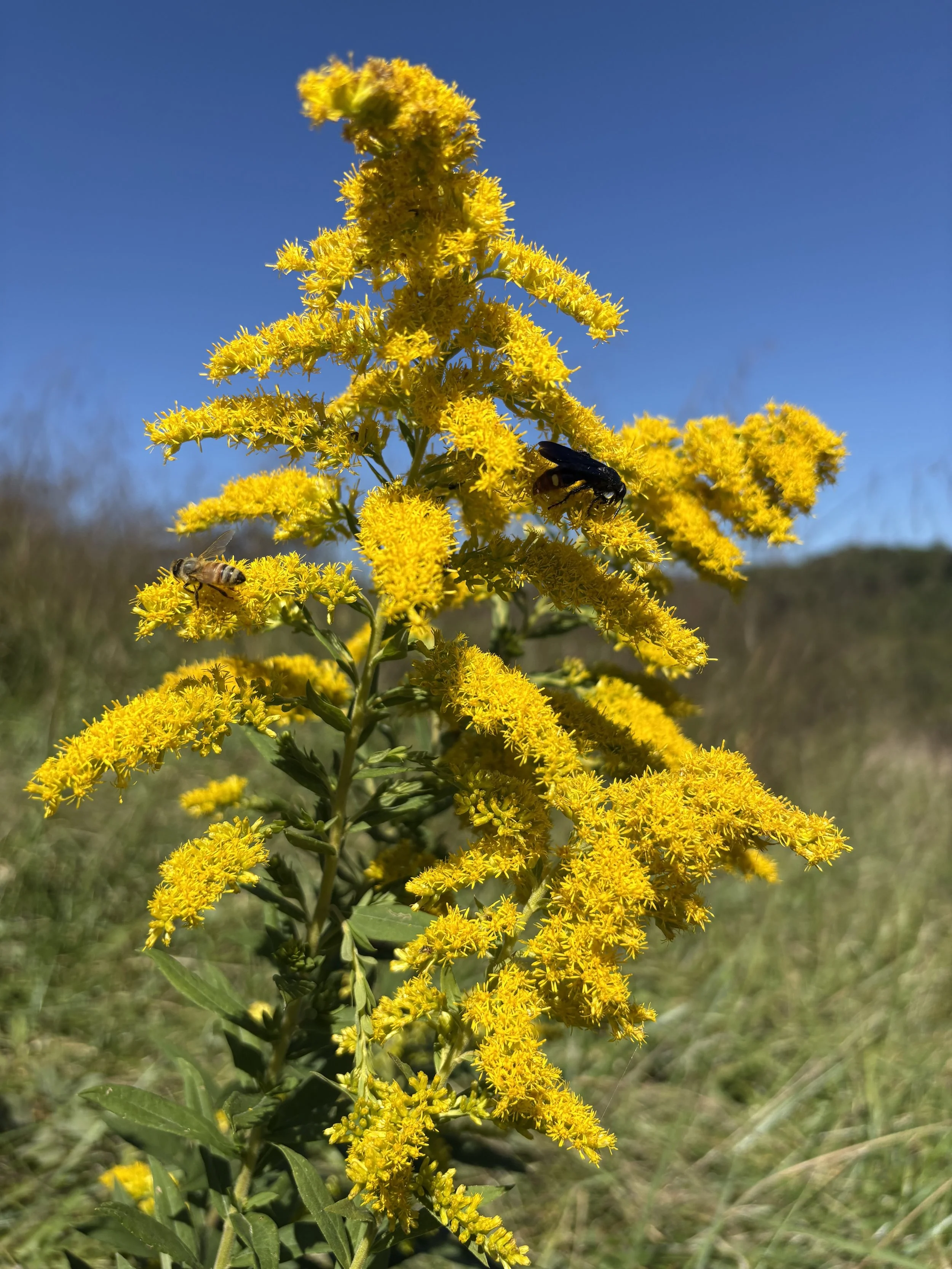
Back in August, we saw many of our tall and gray goldenrod begin sprouting. According to Appalachian weather lore, that usually means fall is fast approaching, with the first frost will occur roughly six weeks from the first set of bright yellow blooms - depending on elevation and latitude factors, of course.
Another long-running bit of folklore that comes to mind is that an especially abundant goldenrod bloom means a harsh winter is coming. When the hills turn gold with goldenrod, start thinking about sweater weather - this adage is definitely more folkloric and fun (can you imagine wearing a fluffy, bright yellow sweater?).
This isn’t an exact science, but it’s a pretty solid rule of thumb, we’ve learned in our time in the South and on the farm. We like to let all of our patches of goldenrod bloom until they’re nice and fluffy, then harvest only what we need to dry out for teas, tinctures, and more.
As mentioned in another entry, we also love watching all the pollinators benefit from the goldenrod blooms; our honeybees especially love the tiny yellow flowers’ pollen as they prepare for their winter stores of honey. We’ve noticed the bees - and many other pollinators - have been much more active among them this early fall, so far.
Autumn Olive Branches & Berries
(Elaeagnus umbellata)
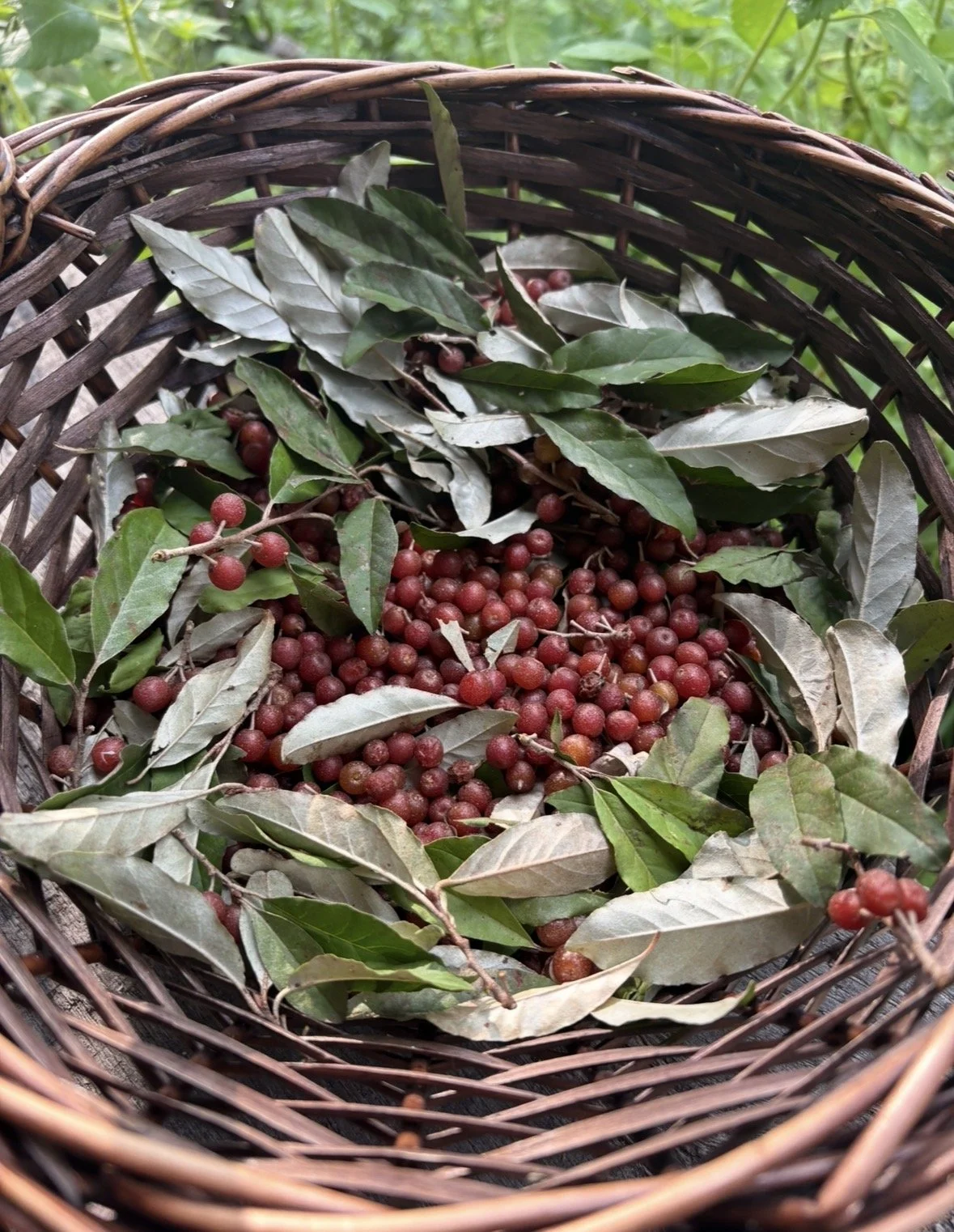
We’re still getting to know our Autumn Olive trees (technically large shrubs), and we’re seeing the branches have been hanging pretty low - and heavy with berries. Appalachian weather lore notes that this usually means to prepare for a harsh, snowy winter ahead - and all the extra berries can be interpreted as nature providing extra food reserves to help wildlife survive.
While the Autumn Olive tree is considered an invasive species, the silver-speckled reddish-orange berries have a pretty tart flavor and they're also high in lycopene, and vitamins A, C, and E. We’ve foraged and harvested plenty so far this season and made jam, and it’s pretty delicious.
The birds that visit or live around the farm agree. We’ve seen lots of birdsign on the Autumn Olive trees; plus, when our chickens can reach some of the lower-hanging berries - it’s definitely a treat for them.
Persimmon Seeds Showing a…
(Diospyros virginiana)
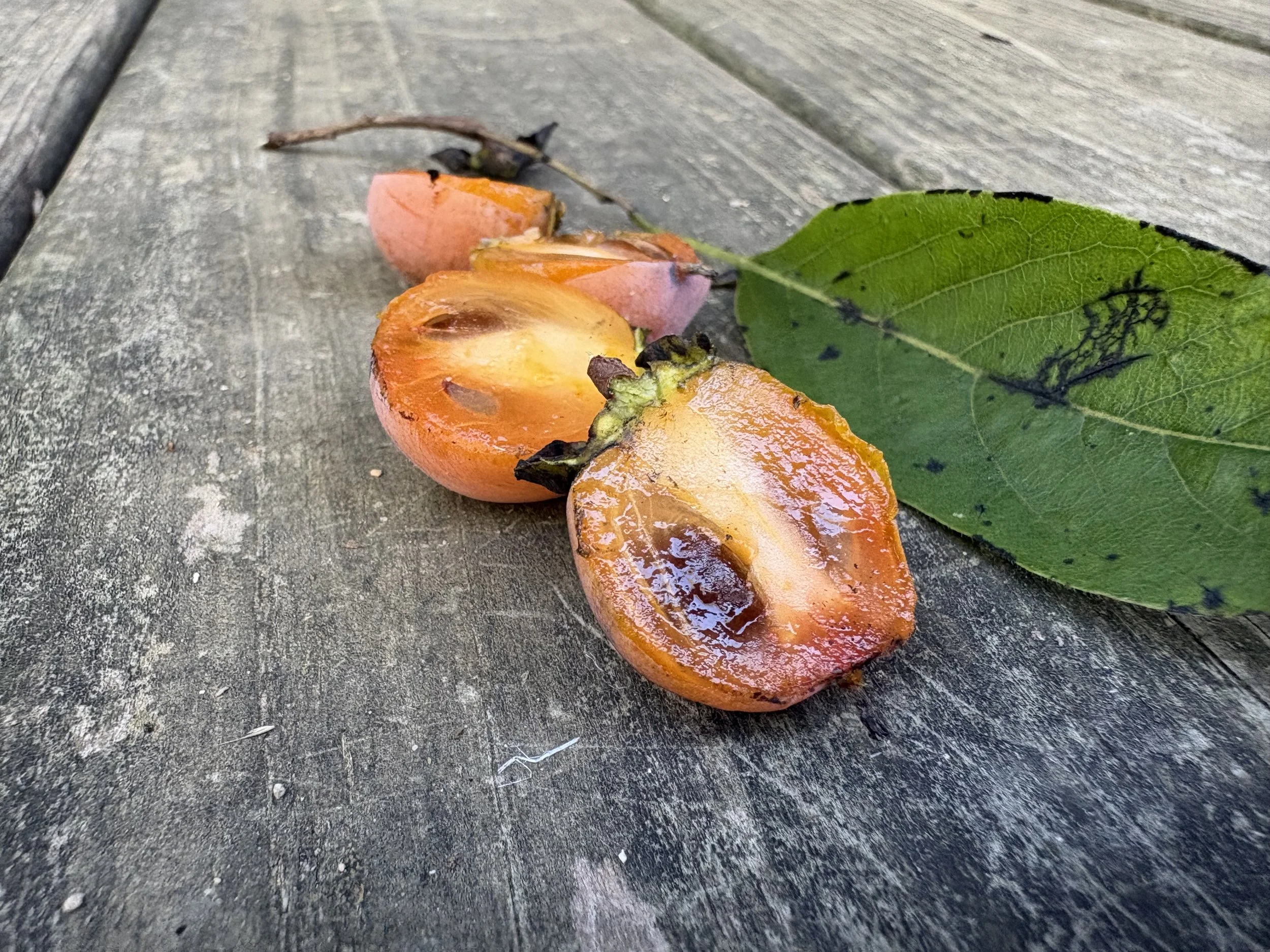
We’ve been watching our wild persimmon trees starting to bear the green-to-orange fruit over the last few weeks. As have other critters that enjoy the persimmons. Just earlier this morning, as we saw more ripened orange persimmons had fallen to the ground that the wildlife had missed, and cut open the fruit to check out the seed.
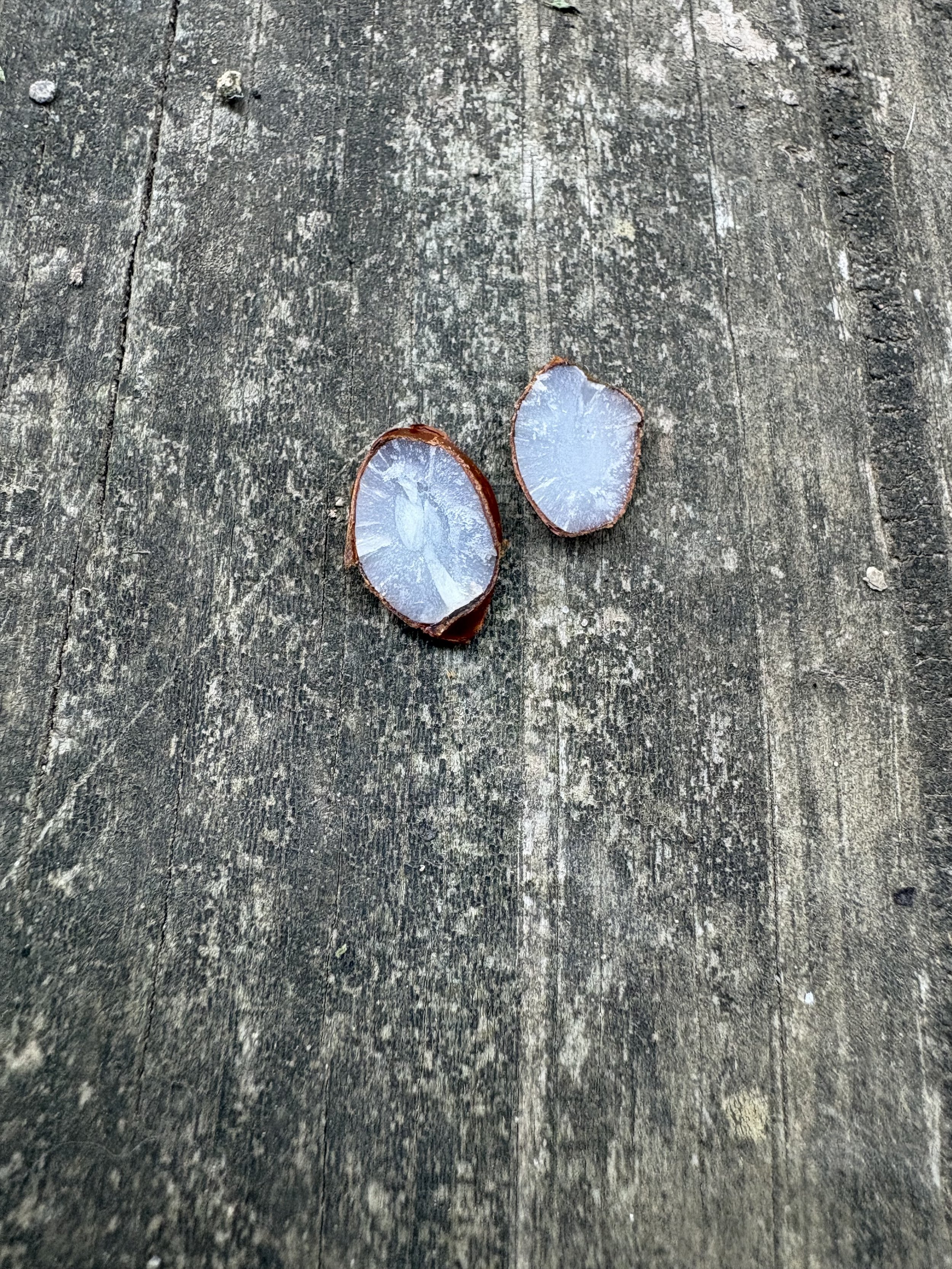
According to Appalachian weather lore, the shape inside the persimmon seed is a telltale sign of the coming winter. With all the other signs seen and heard around the farm, we were a bit apprehensive with what we would find. A few slices with a pocket knife later, we found our sign: a spoon in the center of the seed’s interior. Traditionally, this is interpreted as needing a shovel for a heavy, deep snow for the coming winter.
The branches of the persimmon trees are also hanging heavy with abundant fruit - another sign and symptom of a hard winter ahead.
Appalachian Weather Lore - superstition or generational knowledge?
The old signs of the seasons predate modern weather apps and extended forecasts, and maybe every bit of old Appalachian weather lore gets it right, or maybe some of it is just part of what has been passed down for generations. We know these signs are not entirely accurate indicators of the coming winter, but it’s usually fun to talk about and wait to see if any of them come to fruition. That’s part of what makes the soul of a working family farm - what we all pay attention to, give our energy toward, and what we can all prepare for, together.
For us, the connection to the land (and weather that impacts it) is also a connection to family, because the stories, lessons, traditions, and folklore passed down between generations makes us feel closer to the people who lived before us - and what they paid attention to.
Now, because of what the persimmon seeds showed us, inspiring this farm journal entry, we’re also discussing some gardening tactics and other farm chores (chopping more wood, anyone?) well into the fall and early winter seasons. The work is constant and steady, marching to the beat of nature’s drum. We’re blessed to witness it all, carrying with us a sense of wonder for this lovely fall weather so far, and excited for what’s next - snow or no.