
A Walk Through the Last Blooms of Summer
Farm Life - The Autumn Equinox is just a few days away, and the last blooms of summer are reminding us to slow down and look around despite the to-do lists and farm chores.
The mornings may still feel like summer, but the evenings have started to slightly change. The light gets softer yet more golden. The air has a little more coolness (but the humidity has persisted!) and everywhere we look lately, we’re seeing the farm foliage shifting ever so slowly toward fall. We recently took an evening walk to check on the piglets, the late summer blooms, and the ripening berries on some Autumn Olive trees.
Our evening excursion was a good reason for exercise and to wander a little as the day was winding down. And there were plenty of things to notice.
Some pollinators like butterflies and bees were still fluttering and buzzing among the late summer blooms that are currently coloring the hills of the farm a bright yellow - goldenrod, yellow crownbeard, wingstem, and rough hawkweed - to name a few. All of the gold in the evening sunlight was a feast for our senses. It was all a good reminder that even as we start looking towards fall, the farm isn’t finished blooming yet.
The Last Flowers of Summer Still Have a Job To Do
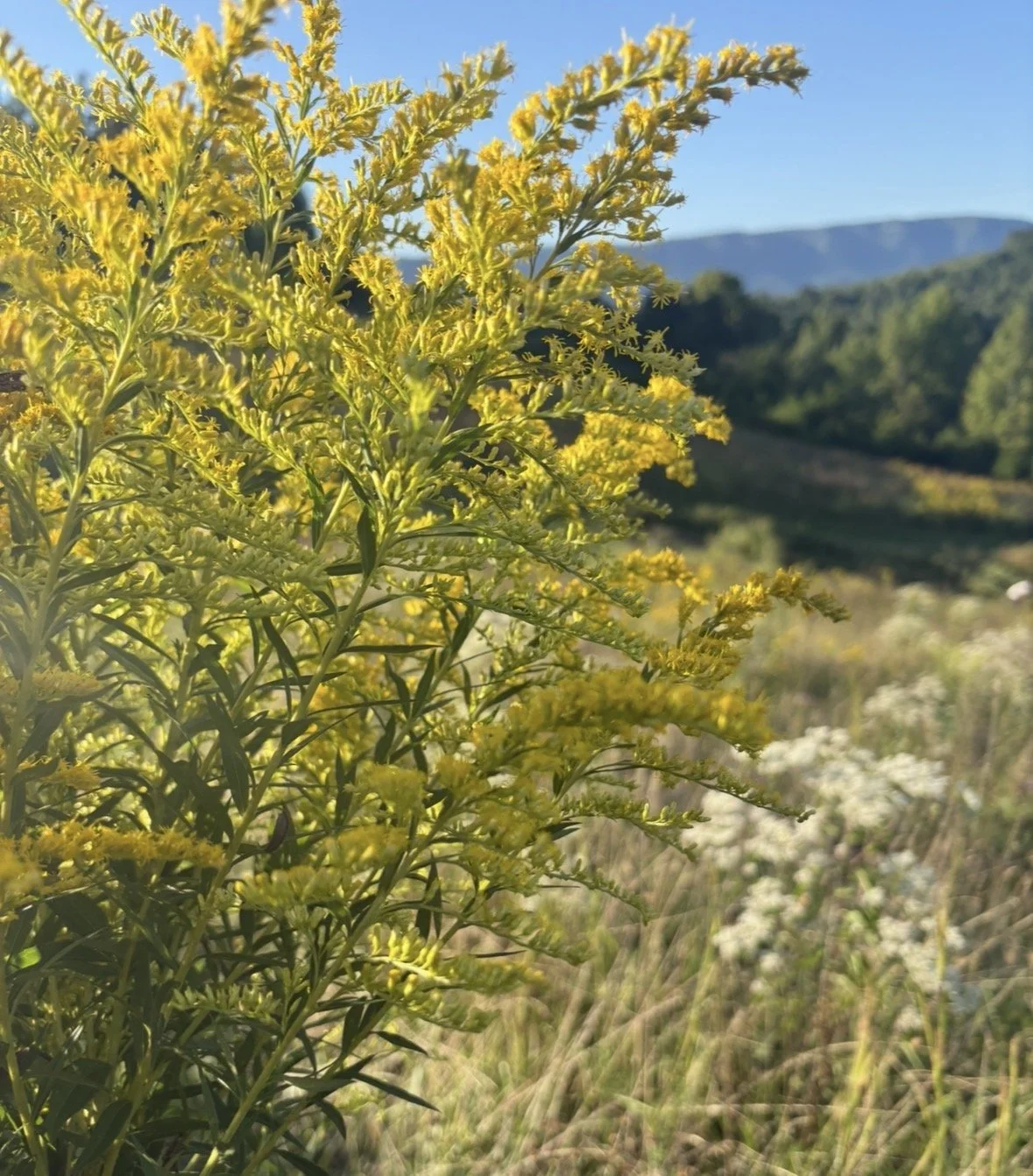
Late summer flowers can be easy to overlook. By late August and September, we’re already thinking about pumpkins, garden harvesting, cooler weather and changing leaves. But for bees, butterflies and other pollinators, those late-season blooms are valuable sources of food.
Goldenrod especially is noticeable this time of year, lighting up most East Tennessee roadsides, fields and woodland edges with bright yellow flowers. We’ve been learning more about it, leaving it all to bloom for the benefit of the farm and our allergies. Despite its reputation for causing itchy allergies, goldenrod isn’t usually the main culprit behind seasonal hay fever; in fact, its pollen is relatively heavy and sticky, making it more likely to stay with the plant rather than travel through the air. Standing in a field of goldenrod and watching the pollinators work all the blooms made for an encouraging sight.
There were also white blooms dappled among all the yellow - late boneset, according to our plant identifier application. These are also pollinator magnets, with their sweet-smelling blooms attracting many across the fields. We also found a few caterpillars munching on them, which was neat to see.
A Little Foraging, A Lot of Learning
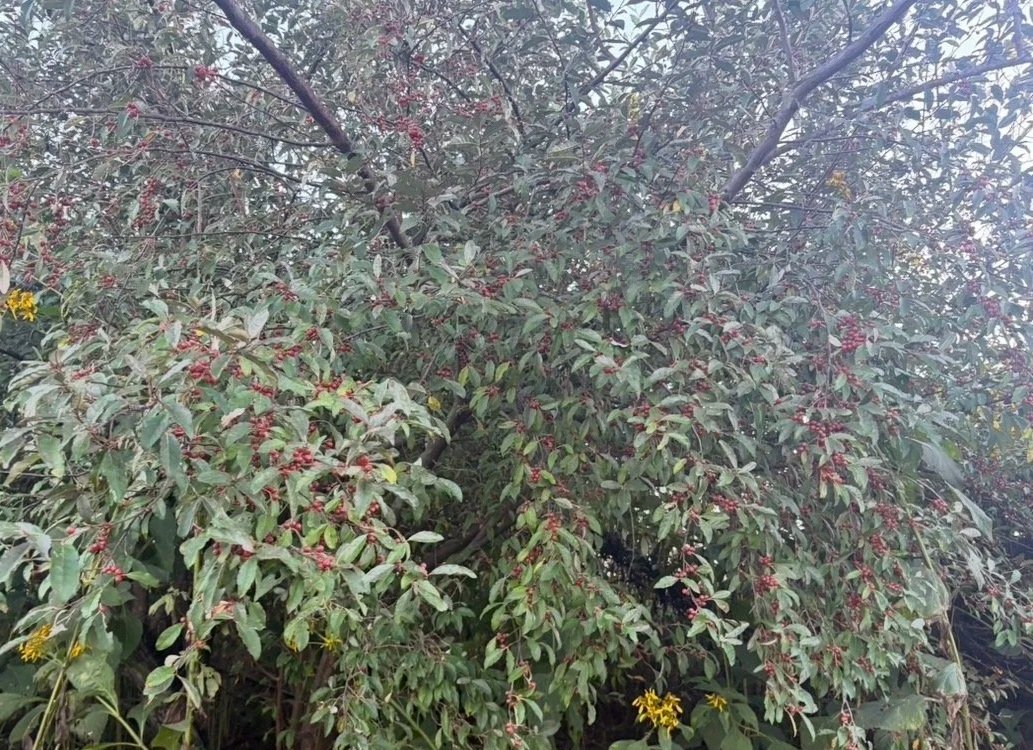
We’re constantly learning things here on the farm. And the plants and animals have much to teach. While on our evening walk, we wanted to learn more about the berry-heavy Autumn Olive trees (large shrubs, technically). The ripe red berries are easy to spot once you know what you’re looking for, and at this time of year, they can be found hanging in clusters along the branches. We gathered a few pounds of berries to bring back to the kitchen, where we later made jam.
Foraging, we’re also learning, has a funny way of making us pay closer attention.
One of us reads a book, or sees a plant we think might be one thing, or another. We all start looking out for one particular plant and suddenly, we’re noticing everything around it: what’s blooming, what’s buzzing, what’s ripening and what’s also beginning to fade.
While we each don’t always have the same reasons for wandering into or around a field on the farm, it’s still fun to observe the blooms and berries together. As we were gathering the berries, talking and learning about the plants and flowers, we all learned from each other as the late-summer light settled over the fields and a low-hanging fog began to hug the mountains in the distance.
A Shift in the Seasons
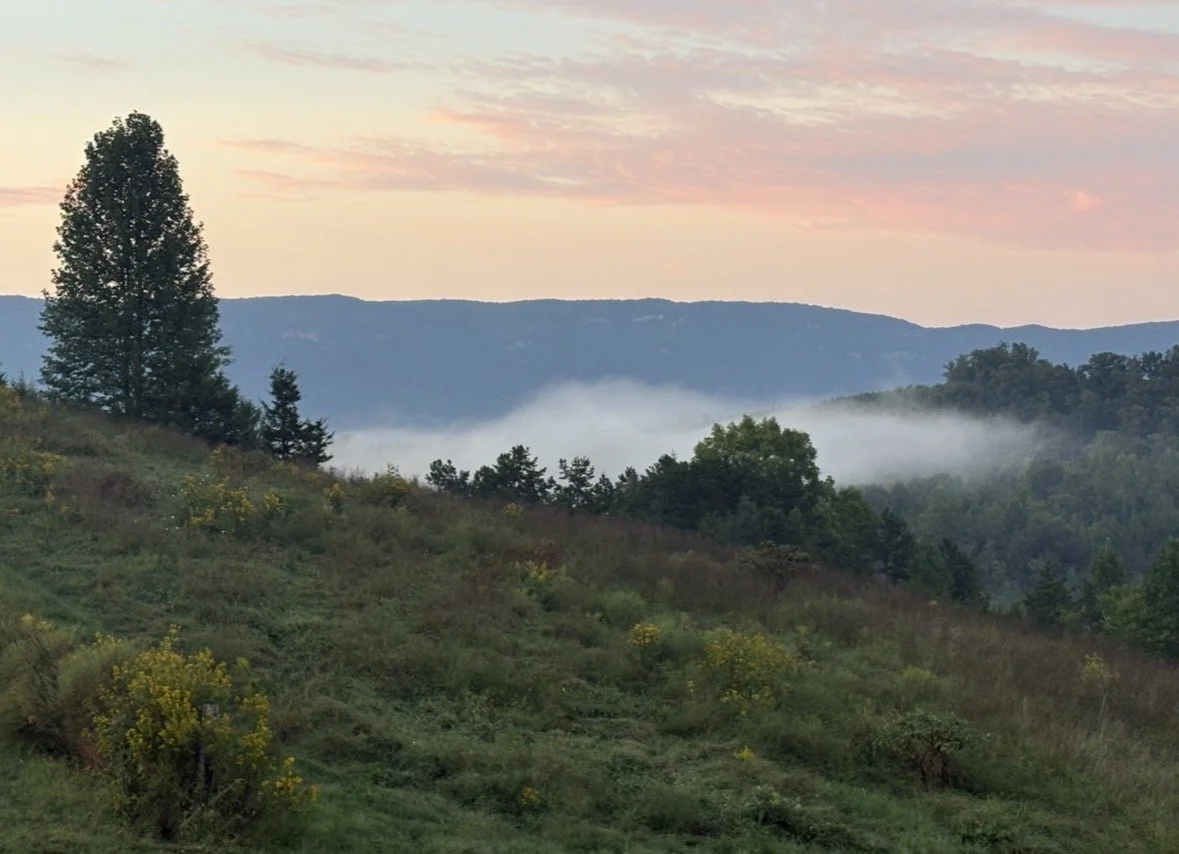
We all commented on feeling the shifting of the seasons - summer fading, fall approaching.
The fields are changing, the evenings are getting shorter, and some plants are setting seed while others are finishing their final blooms. Slowly, almost imperceptibly, the farm is turning toward fall. We’ve been reading from the Old Farmer’s Almanac lately and learned that on the fall equinox, which is the precise moment the sun crosses the celestial equator, the Earth’s axis is neither tilted toward nor away from the sun. This happens at the same instant worldwide. So, we think perhaps the shift, the tilt, the turning we’ve all been feeling lately makes sense. Perhaps it’s our innate knowing that change is occurring, as the seasons slow and flow.
For now, though, we’re happy to enjoy what’s still blooming. And if that happens to include a basket full of goldenrod flowers, or Autumn Olive berries - even better.